View Full Transcript
1
00:00:12.900 --> 00:00:17.370
Enterprises are deploying artificial intelligence agents, but the data behind real
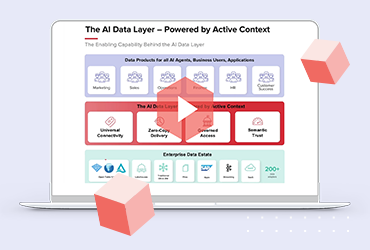
2
00:00:17.460 --> 00:00:21.241
business questions is split across many systems, and connecting it may take weeks
3
00:00:21.300 --> 00:00:22.260
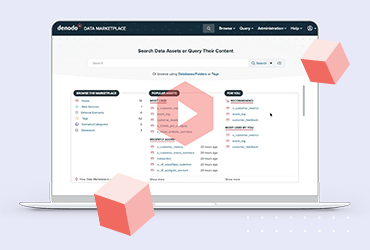
of data engineering.
4
00:00:23.670 --> 00:00:28.320
With the Denodo Platform, Claude connects once through the Denodo MCP server to a
5
00:00:28.350 --> 00:00:32.940
governed semantic layer over customer data, churn predictions, and support tickets.
6
00:00:34.411 --> 00:00:38.190
The Denodo Platform gives Claude an identity with restricted privileges.
7
00:00:39.330 --> 00:00:43.320
Personal data is masked, and every agent request is logged, including what
8
00:00:43.350 --> 00:00:44.580
restrictions were applied.
9
00:00:45.990 --> 00:00:50.040
This is the Denodo Data Marketplace, a governed shop for data experience.
10
00:00:51.481 --> 00:00:54.481
We search for this data product called Retention Priority.
11
00:00:55.590 --> 00:01:00.180
This data product fed rates key information including churn probability, revenue at
12
00:01:00.210 --> 00:01:02.940
risk, the priority score, and the open tickets.
13
00:01:03.960 --> 00:01:07.680
But note that ticket severity and aggregated order totals over time are not
14
00:01:07.740 --> 00:01:08.790
included in this view.
15
00:01:10.200 --> 00:01:14.880
This 360-degree graph shows data sources including customer and order data from
16
00:01:14.940 --> 00:01:19.230
PostgreSQL, churn analytics data from Databricks, and ticket support data from an
17
00:01:19.321 --> 00:01:19.920
API.
18
00:01:21.301 --> 00:01:25.110
It also shows us the consumers of that data, which include the Claude Retention
19
00:01:25.200 --> 00:01:28.020
Agent and the HubSpot application for follow-up tasks.
20
00:01:29.520 --> 00:01:32.910
In this view, we have already seen the full lineage of data that is being made
21
00:01:32.940 --> 00:01:35.821
available to the Claude Retention Agent for decision making.
22
00:01:37.229 --> 00:01:40.920
Now let's ask Claude, who should our retention team contact first?
23
00:01:42.360 --> 00:01:44.370
Show the top five in revenue at risk.
24
00:01:45.391 --> 00:01:49.590
We can see the Denodo MCP server tool call and the skills that Claude needed to
25
00:01:49.650 --> 00:01:54.120
query Denodo, and the top five customers in priority order were returned with full
26
00:01:54.180 --> 00:01:55.230
name redacted.
27
00:01:56.610 --> 00:02:00.510
Now let's ask Claude something that was not in the retention data product we saw
28
00:02:00.570 --> 00:02:00.930
earlier.
29
00:02:02.370 --> 00:02:06.420
If you remember, ticket severity and aggregated order totals over time were not
30
00:02:06.480 --> 00:02:08.641
present in that particular data product view.
31
00:02:09.961 --> 00:02:14.430
Our question is, amongst our top 20 at-risk customers who have a critical or high
32
00:02:14.520 --> 00:02:18.660
open ticket, show their order value for the last six months, including those with
33
00:02:18.720 --> 00:02:21.060
no orders according to retention priority.
34
00:02:22.500 --> 00:02:26.910
Claude composes a new query over existing Denodo views and retrieves the results.
35
00:02:28.351 --> 00:02:32.790
The question changed, but the one Denodo MCP server was enough to get the data
36
00:02:32.851 --> 00:02:33.240
needed.
37
00:02:34.650 --> 00:02:37.980
No new data product was built, and no pipeline job was run.
38
00:02:39.330 --> 00:02:43.500
Note that customer ID 2 is the one ranked with the highest priority for retention
39
00:02:43.560 --> 00:02:44.160
intervention.
40
00:02:45.570 --> 00:02:49.470
Now that Claude has the governed data it needs from across the enterprise, it can
41
00:02:49.530 --> 00:02:51.120
complete the agentic workflow.
42
00:02:52.440 --> 00:02:56.370
Let's ask Claude to create a HubSpot follow-up task for the highest priority
43
00:02:56.430 --> 00:02:59.370
customer on that list and show us the task before saving it.
44
00:03:00.750 --> 00:03:04.680
Claude prepares a task for the highest priority qualifying customer with customer
45
00:03:04.770 --> 00:03:07.410
ID 2 using the data Denodo returned.
46
00:03:08.760 --> 00:03:12.690
We verify the contact and task before approving, following human-in-the-loop
47
00:03:12.750 --> 00:03:14.219
agentic governance principles.
48
00:03:15.719 --> 00:03:19.440
Claude has completed the agentic workflow, and the task has been created for
49
00:03:19.500 --> 00:03:21.541
follow-up for this highest priority customer.
50
00:03:22.951 --> 00:03:27.360
We can also see the customer ID, which has been supplied by Denodo in this task.
51
00:03:28.740 --> 00:03:33.510
Later, customer 2, whom we just created the HubSpot task for, has opted out of
52
00:03:33.541 --> 00:03:34.500
being contacted.
53
00:03:35.791 --> 00:03:40.171
An administrator adds one rule in Denodo to the retention agent's identity, which
54
00:03:40.201 --> 00:03:43.590
prohibits the agent from viewing anything regarding customer ID 2.
55
00:03:50.370 --> 00:03:54.000
The agent is now unable to view any data regarding customer ID 2.
56
00:03:54.421 --> 00:03:58.740
Because of the single governance policy implemented by the Denodo administrator, no
57
00:03:58.800 --> 00:04:01.710
further outreach can be prepared for the customer by this agent.
58
00:04:03.090 --> 00:04:06.330
This dashboard reads the Denodo Platform's own query log.
59
00:04:07.351 --> 00:04:11.671
An authorized operator can see every request the agent made, including the agent's
60
00:04:11.760 --> 00:04:16.140
identity, the time of the request, the outcome, and how many rows were returned.
61
00:04:17.550 --> 00:04:21.031
Before the rule, the agent's request on this view returned data.
62
00:04:22.410 --> 00:04:26.880
After it, the same request for customer 2 is recorded as restricted with no rows
63
00:04:26.910 --> 00:04:27.510
returned.
64
00:04:28.890 --> 00:04:32.640
The policy and the evidence are created in Denodo for every agent that connects
65
00:04:32.701 --> 00:04:38.130
through it. The Denodo MCP connector is available in the Claude Marketplace.
66
00:04:39.510 --> 00:04:43.770
Denodo also provides the virtual query language generation skills, which can teach
67
00:04:43.860 --> 00:04:46.650
agents how to query data using the Denodo language.
68
00:04:48.031 --> 00:04:52.260
Denodo helps Claude make enterprise agentic workflows seamless by providing a
69
00:04:52.320 --> 00:04:56.550
single governed gateway to enterprise data, while Claude completes the rest of the
70
00:04:56.670 --> 00:05:00.451
agentic workflow, leading to desired business outcomes and the most efficient use
71
00:05:00.510 --> 00:05:01.260
of resources.
Enterprises are deploying AI agents, but the data behind real business questions is split across many systems, and integrating the right data may be complex.
With Denodo, Claude connects once, through the Denodo MCP Server, to a governed semantic layer over customer data, churn predictions and support tickets. The Denodo Platform gives Claude an identity with restricted privileges. Personal data is masked and every agent request is logged, including what restrictions were applied.
Denodo provides agents with one, secure gateway to enterprise data, enabling them to complete the agentic workflow without wasting resources on finding the right data. At the same time, Denodo restricts agents from accessing Personally Identifiable Information.