

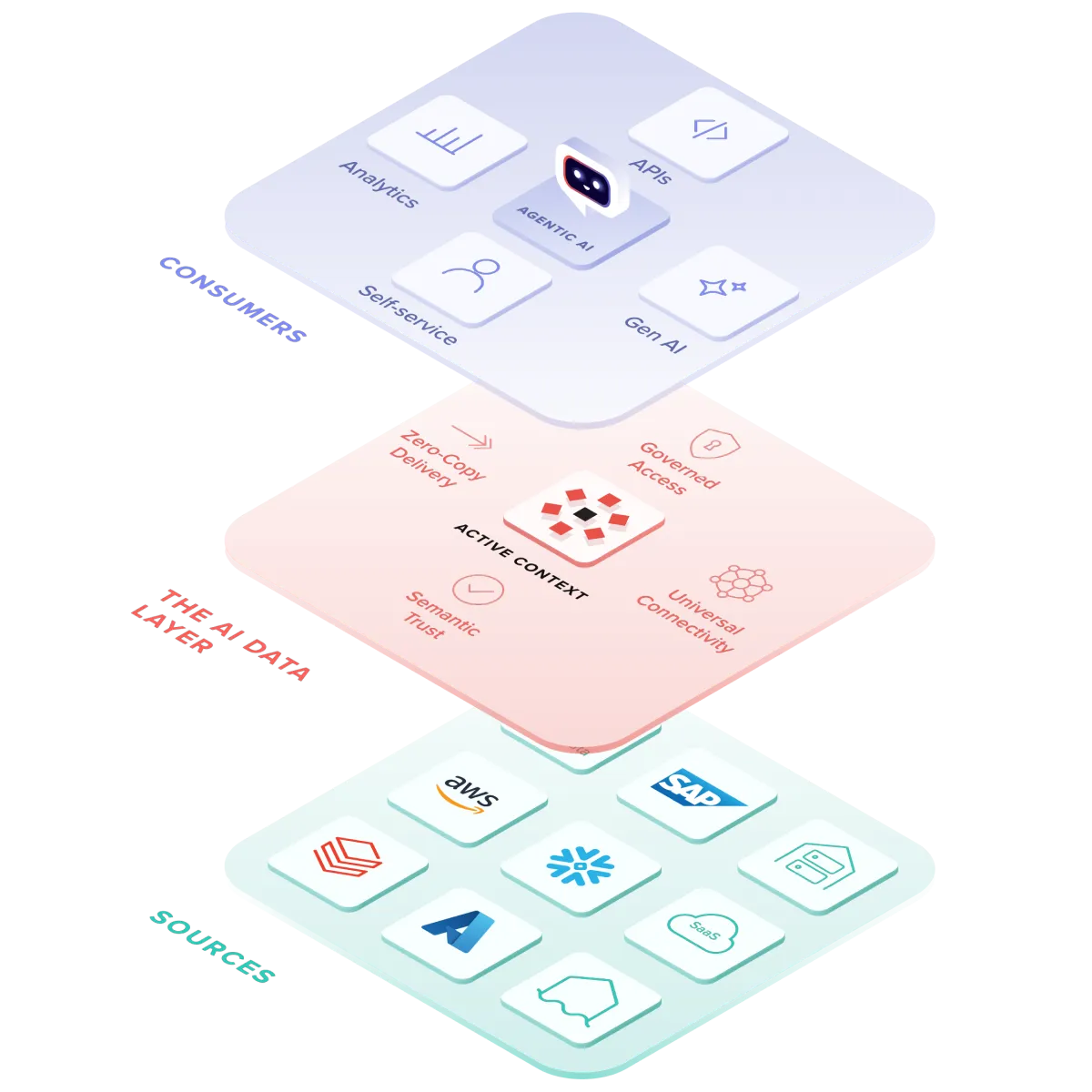
Scale New Data and AI Initiatives Without Scaling Complexity
Enterprise data is becoming more distributed while the number of consumers continues to grow. AI agents, copilots, analytical applications, operational workflows, and business users increasingly need information that spans many systems.
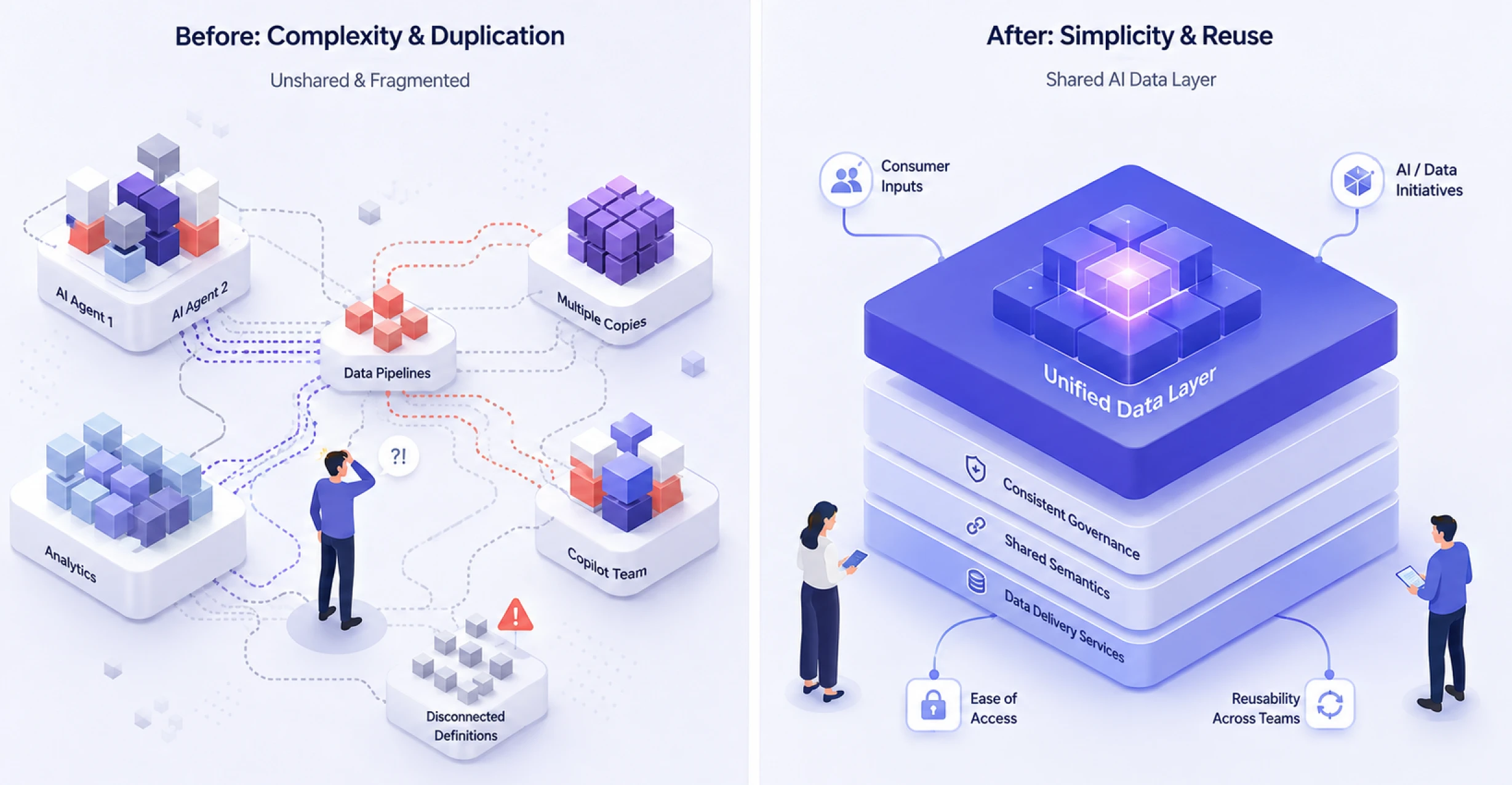
When each new initiative requires its own pipelines, copies, semantics, and governance, delivery slows and complexity grows. Model Context Protocol (MCP) makes enterprise data easier to expose, but without a shared foundation it can also multiply point-to-point connections and inconsistent context.
A shared AI data layer changes the operating model. Teams can reuse connectivity, governance, semantics, and delivery services across initiatives instead of rebuilding them each time.
The result is faster delivery, less duplicated work, more consistent governance, and a foundation that becomes more valuable as more consumers use it.
What Is an AI Data Layer?
An AI data layer is shared enterprise infrastructure for delivering live, governed, and semantically trusted data across distributed environments to AI and every other data consumer.
It sits between the systems where data is created and stored and the systems that use it. Rather than replacing lakehouses, warehouses, catalogs, governance tools, or AI platforms, it connects and extends them through a common layer of access, policy enforcement, optimization, and business meaning.
This enables organizations to get more value from existing investments while reducing the time and effort required to make enterprise data usable for each new initiative.
What an AI Data Layer Changes
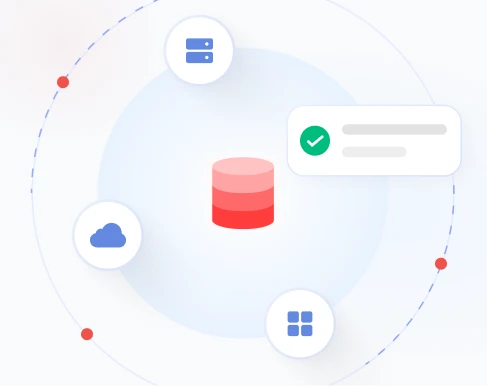
Reduce Data Movement and Rework
Use live data where it resides, when appropriate, reducing unnecessary replication, synchronization, storage, and project-specific integration.
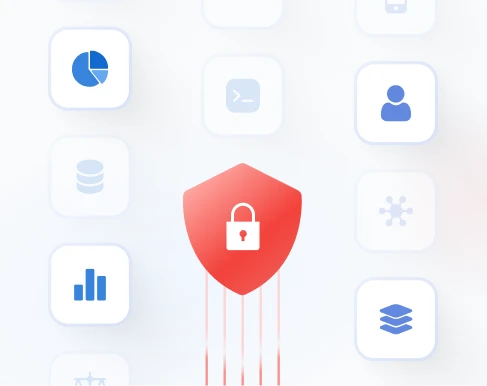
Govern More Consistently
Apply security, privacy, and usage policies through a shared layer instead of recreating controls independently across applications and platforms.
Move Faster
Reuse access, governance, and semantics across projects so teams spend less time rebuilding the data foundation and more time delivering business outcomes.
Four Pillars That Turn Data into Business-Ready Context
An AI data layer must do more than connect consumers to data. The information delivered also has to be current, appropriately governed, and consistently understood.
Reach more of the enterprise data estate through one logical access layer, reducing the time and effort required to connect each new consumer.
Use live data from its current location when appropriate, reducing unnecessary replication, storage, processing, and synchronization.
Define policies centrally and apply them at runtime at the point of access, improving consistency while reducing duplicated governance work across projects.
Create shared business meaning that can be reused across AI, analytics, applications, and enterprise data products, reducing ambiguity and improving confidence in outcomes.
Together, these four pillars turn distributed enterprise data into active context: live, governed, connected, and semantically trusted information that is ready for the consumer and task.
From Data Access to Active Context

Make Existing Data Investments More Valuable
3–4x
Faster
Improved time-to-insight with faster access to trusted, business-ready data
75%
Less Effort
Streamlined data engineering effort through reusable integration and data views
5–10x
Faster
Accelerated rollout of new data-driven initiatives through unified access to real-time and historical data
Deliver Trustworthy Agentic AI
Give agents, copilots, and AI applications live enterprise data, trusted business meaning, and governance appropriate to each request.
Explore Agentic AIAccelerate the Value of the Data Lakehouse
Extend lakehouse investments with access to data beyond the lakehouse, reduce unnecessary movement, and optimize how distributed data is used.
Explore Lakehouse ValueEnable Governed Data Sharing
Create reusable enterprise data products that make trusted data easier to discover, understand, access, and share across teams and domains.
Explore Data Sharing
Denodo makes the enterprise data estate work together as a reusable foundation for AI and every other data consumer.
Build on Data the Enterprise Can Trust
Create a reusable foundation for delivering live, governed, and semantically trusted enterprise data wherever AI and the business need it.