



What Is Artificial Intelligence (AI)?

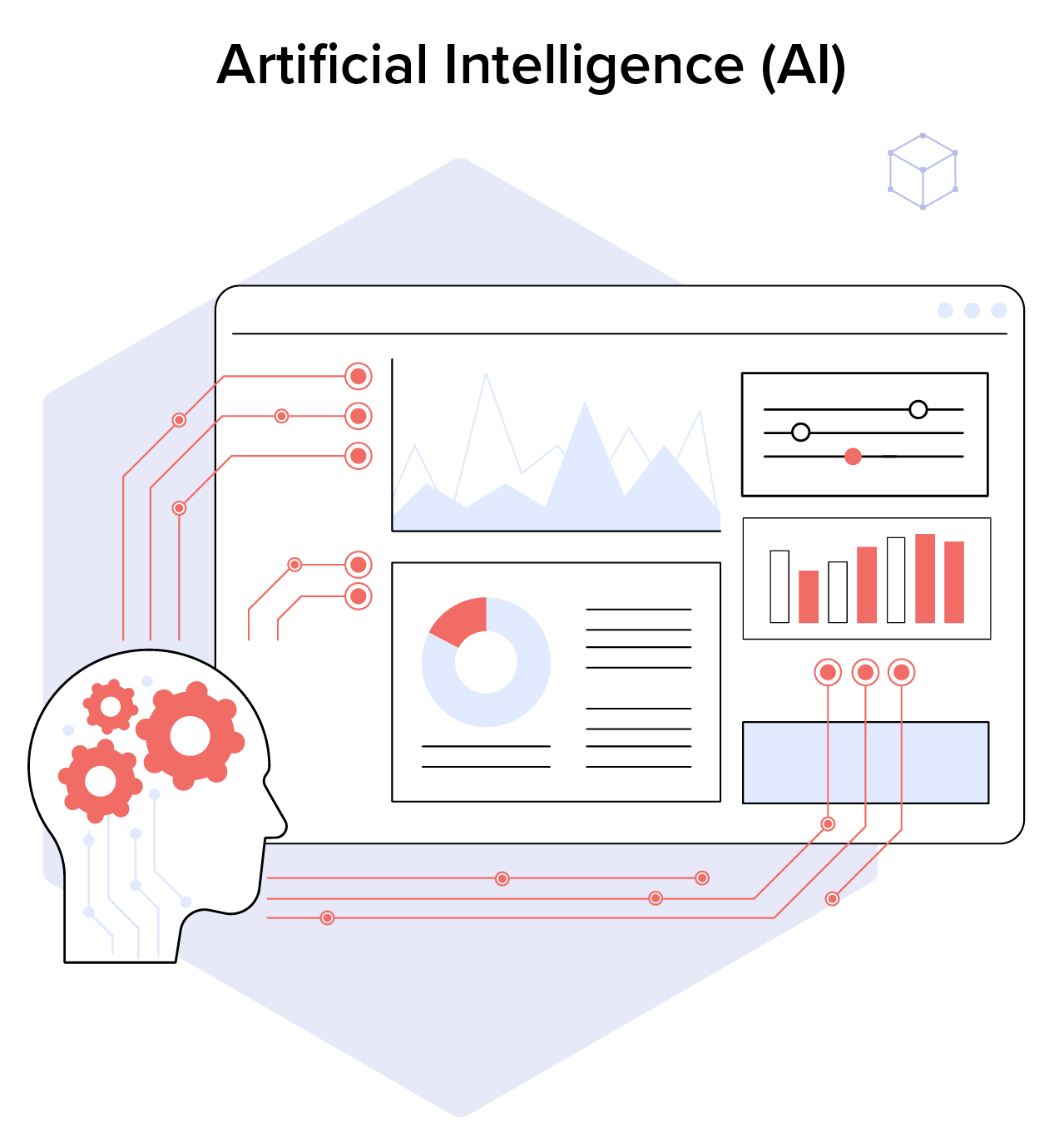
Artificial intelligence (AI) is the simulation of human intelligence through code. AI systems leverage algorithms and vast amounts of data to perform such complex tasks as solving problems, recognizing speech, and making decisions.

Artificial Intelligence

Why Is Artificial Intelligence Important?

AI is enabling automation, improving efficiency, and fostering innovation. From personalized recommendations in e-commerce to advanced healthcare diagnostics, AI is reshaping the way businesses and individuals interact with technology. AI enhances productivity, reduces human error, and accelerates decision-making processes.

Key Characteristics of AI

The field of AI has been rapidly evolving since 2023, so the definitive, agreed-on list of key characteristics will never be comprehensive. However, a few core characteristics are widely recognized as being essential to a definition of AI. A few of these are:

  1. Machine Learning (ML):AI systems improve their performance over time through data-driven learning.
  2. Natural Language Processing (NLP):AI understands and processes human language for applications like chatbots and voice assistants.
  3. Computer Vision: AI interprets and analyzes visual data from the world.
  4. Automation: AI automates repetitive, complex tasks, reducing the need for human intervention.
  5. Reasoning and Problem-Solving: AI can analyze data patterns and make informed decisions based on logic and reasoning.

Types of AI

AI represents a broad range of technologies and capabilities. Roughly speaking, these fall into two main categories, “narrow” and “general,” and an emerging new category as of 2025, “super.” This is how each category is defined:

  1. Narrow AI: AI designed for specific tasks, such as recommendation algorithms and virtual assistants
  2. General AI: AI with human-like cognitive abilities, capable of performing a variety of intellectual tasks
  3. Super AI: Hypothetical AI that surpasses human intelligence. Note: This is still a theoretical concept as of March 2025.

Applications of AI

AI can be applied across a wide variety of vertical applications, including:

  1. Healthcare: AI-powered diagnostics, personalized treatment plans, and robotic surgeries
  2. Finance: Fraud detection, automated trading, and risk assessment
  3. Retail: AI-driven customer recommendations, inventory management, and customer-facing chatbots
  4. Manufacturing: Predictive maintenance, smart robotics, and process automation
  5. Transportation: Autonomous vehicles, traffic prediction, and route optimization

Benefits of AI

When properly implemented and supported with trustworthy, up-to-date data, AI has the potential for delivering numerous benefits, including:

  1. Enhanced Efficiency: AI automates tasks and accelerates processes.
  2. Data-Driven Decision-Making: AI analyzes vast datasets to provide valuable insights
  3. Improved Accuracy: AI reduces errors and enhances precision in a variety of fields
  4. Cost Savings: AI optimizes operations and reduces labor costs.
  5. Personalization: AI tailors experiences based on user behavior and preferences.

Challenges and Ethical Considerations of AI

Despite the many potential benefits of AI, it does bring a unique set of challenges that must be taken into account during the formation of any largescale AI strategy. Such challenges include:

  1. Bias in AI Models: AI systems can inherit biases from training data, leading to unfair outcomes.
  2. Data Privacy Concerns: AI-driven data processing raises concerns about privacy and security.
  3. Job Displacement: AI automation may replace certain jobs, requiring workforce reskilling.
  4. Regulatory and Ethical Issues: Responsible AI development requires compliance with ethical standards and regulations.

How the Denodo Platform Supports AI

To accelerate the development of AI applications, Denodo offers the Denodo AI SDK, which simplifies how developers connect AI models to enterprise data. The AI SDK provides a unified, secure interface for accessing and preparing data from any source, eliminating the need for custom integration code or complex data pipelines. It automatically handles data embedding, orchestration, governance, and advanced security polices, so AI applications are built on trusted, policy-compliant data from the start.

At the core of the AI SDK are three key capabilities:

  1. Denodo Query RAG: Empowers users to ask natural language questions and get fast, accurate answers to fact-based queries—like what happened, when, or how much—using real-time, governed data. It’s ideal for replacing manual reports and dashboards with an intuitive, conversational self-service way to access information.
  2. Denodo DeepQuery:Tackles complex, open-ended questions that require reasoning, synthesis, or explanation—like understanding why something happened or identifying key drivers across systems. Delivers explainable, multi-step insights grounded in real-time data. Announced on July 7, 2025, DeepQuery is currently available as a private preview.
  3. MCP Support: Enables seamless integration with any MCP-compliant client, enabling organizations to build and orchestrate multi-agent AI systems using open, interoperable standards. With Denodo’s trusted data foundation, enterprises can easily enable natural language, self-service access across their data ecosystems.

The Denodo Platform and AI: Case Studies

Many companies have leveraged the Denodo Platform to support their AI initiatives. Here are just a few examples:

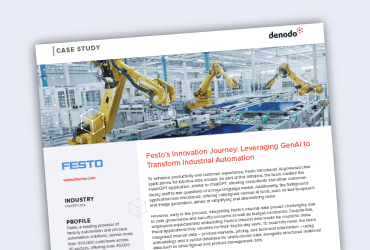
Festo implemented the Denodo Platform to deliver AI-ready data, drawn from across the organization, to the company’s chatbot

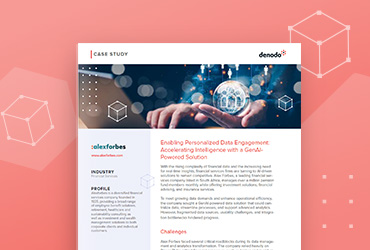
Alexforbes leveraged the Denodo Platform to unify, simplify, and accelerate access to data, and the Denodo AI SDK to streamline the development of AI-driven query processing, in natural language, across a variety of financial and operational data sources.

How AI Supports the Denodo Platform

Denodo also leverages AI internally to make working with data faster, easier, and more intelligent. Denodo Assistant is an embedded AI capability designed to simplify and accelerate common data management tasks for both data engineers and business users. From intelligent autocompletion and proactive optimization tips to natural language query assistance and dataset recommendations, Denodo Assistant uses the platform’s semantic layer and active metadata to guide users at every step.

The Future of AI

The future of AI promises advancements in explainable AI, AI ethics, and the integration of AI in everyday life. As technology evolves, AI will continue to enhance industries, improve human-machine interaction, and drive innovation across sectors.

Free Trial

Experience the full benefits of Denodo Enterprise Plus with Agora, our fully managed cloud service.

START FREE TRIAL
Denodo Express

The free way to data virtualization

DOWNLOAD FOR FREE