What Is a Data Lakehouse?

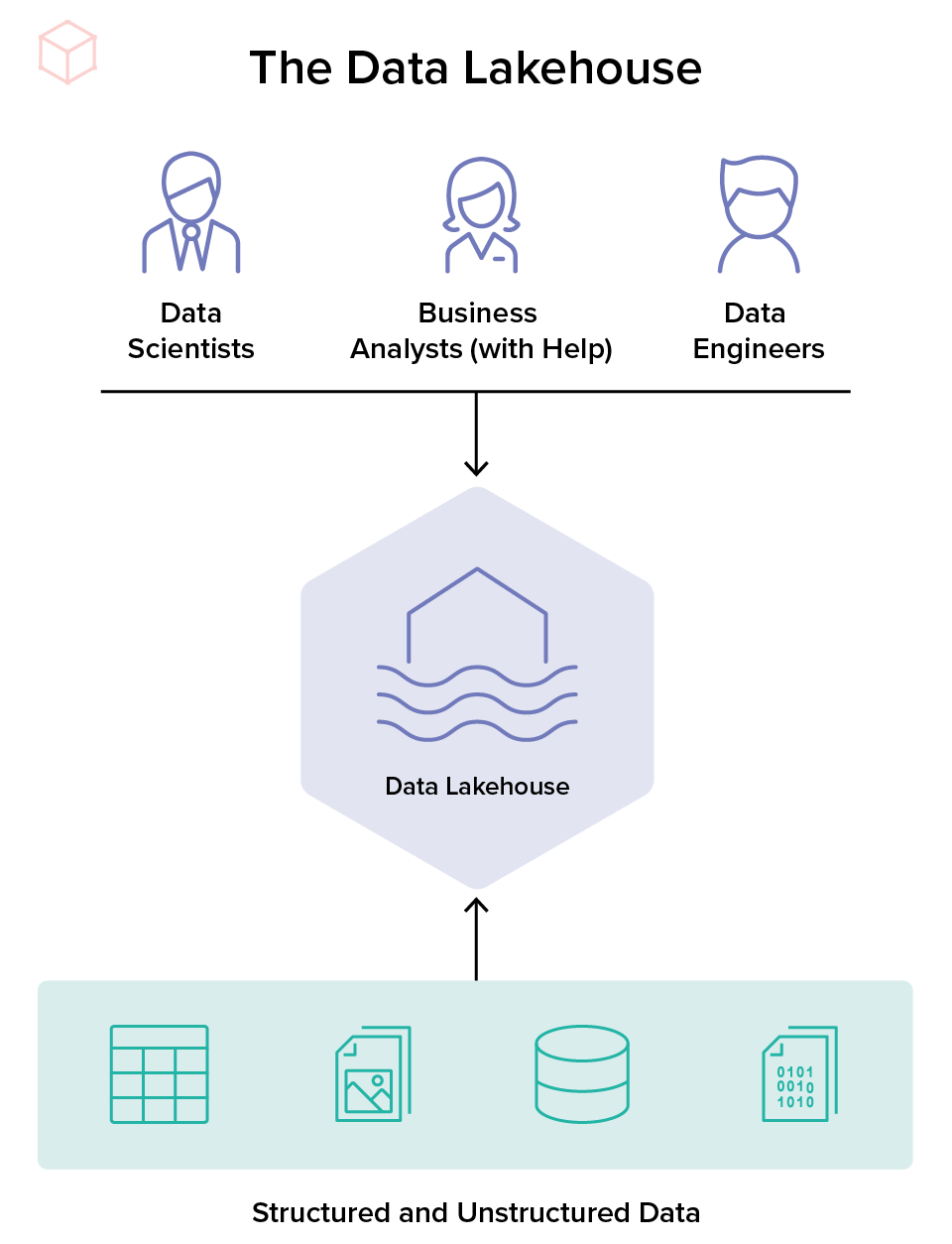
A data lakehouse combines the ability of data lakes to handle practically unlimited volumes of unstructured data with the ability of data warehouses to store and analyze large volumes of structured data. Data lakehouses enable organizations to handle large-scale data analytics while maintaining data governance, reliability, and performance.

Lakehouse Architect

Why Are Data Lakehouses Important?

Data lakehouses are important to organizations that are looking for ways to simplify data management and improve analytics. The key advantages include:

  1. Unified Storage and Processing:They support both structured and unstructured data in a single repository
  2. Scalability and Performance: They offer the flexibility of data lakes with the efficiency of data warehouses
  3. Cost Efficiency: They reduce data duplication and minimizes storage and processing costs
  4. Advanced Analytics and AI Integration: They enable real-time analytics, machine learning, and AI-driven insights
  5. Strong Data Governance:They offer data quality and security, as well as features for maintaining regulatory compliance

Key Characteristics of a Data Lakehouse

Data lakehouses, in combining the strengths of data lakes and data warehouses, offer a single system for managing diverse data types. Here’s a more detailed breakdown of the most common characteristics:

  1. Open Data Formats: They use open standards to prevent vendor lock-in and enhance flexibility
  2. Schema Enforcement and Governance:They maintain structured metadata and support ACID transactions
  3. Optimized Query Performance: They integrate indexing and caching to enhance analytics speed
  4. Unified Data Management: They combine raw data storage with structured querying capabilities
  5. Support for BI and ML Workloads: They provide a single platform for data science and business intelligence

How Data Lakehouses Work

Data Lakehouses integrate the scalability of data lakes with the structured query performance of data warehouses. The workflow typically includes:

  1. Data Ingestion: Collecting raw data from a variety of sources, such as IoT devices, databases, and applications
  2. Data Storage: Storing structured, semi-structured, and unstructured data in an optimized format
  3. Data Processing and ETL: Transforming, cleansing, and preparing data for analytics and machine learning
  4. Data Governance and Security: Implementing role-based access, encryption, and compliance policies
  5. Data Querying and Analytics: Using SQL-based querying, AI-driven insights, and real-time dashboards

Applications Supported by Data Lakehouses

Data lakehouses can support a wide variety of use cases and applications, including:

  1. Enterprise Data Analytics: Enabling large-scale business intelligence and reporting
  2. AI and Machine Learning: Supporting advanced data science workflows and model training
  3. Financial Services: Enhancing risk analysis, fraud detection, and compliance monitoring
  4. Healthcare and Life Sciences: Managing medical records, genomic data, and predictive analytics
  5. Retail and E-Commerce: Improving customer personalization, inventory management, and demand forecasting

Data Lakehouse Challenges

Despite their many benefits, data lakehouses do present a few challenges, including:

  1. Data Silos and Distributed Sources: Some data will always reside outside of the data lakehouse, if only during mergers and acquisitions (M&A) activities or due to multi-cloud infrastructures. Replicating this distributed data into the data lakehouse using extract, transform, and load (ETL) processes increases operational complexity and cost.
  2. Semantically Unifying Data: Data lakehouses lack universal-semantic-layer functionality by which any end user can readily find and consume data in a self-service manner.
  3. Providing Personalized Data Self-Service: Data lakehouses do not provide extensive search and discovery features with comprehensive access controls, preventing business analysts and data scientists from accessing data in a personalized, self-service manner.
  4. Federated Data Governance with Centralized Oversight: Data lakehouses lack unified data governance frameworks with which to enforce consistent policies across distributed data sources, i.e., beyond the data lakehouse itself.
  5. Data Processing Delays: Data lakehouses require data to be onboarded and transformed before becoming usable. This delay can impact compliance efforts that require real-time or near-real-time data access for governance, auditing, and reporting.
  6. Real-time Unified Data Delivery, while Controlling Costs: Lakehouse-resident data is only as current as the most recent data load, and real-time synchronization requires expensive, always-on replication from all underlying data sources.

How the Denodo Platform Augments the Capabilities of Data Lakehouses

The Denodo Platform augments data lakehouses by adding:

  1. A semantic layer above the lakehouse and associated data sources, so users can better understand the data across myriad applications and sources, and AI applications can immediately leverage the data for more trustworthy responses
  2. Data marketplace capabilities that provide users with seamless access to data without their having to code or ask for IT assistance
  3. Data governance capabilities across all applicable data sources, with built-in, fine-grained access controls, privacy compliance, and data usage monitoring
  4. Real-time data access, supported by advanced query optimization features for optimal performance, and FinOps monitoring capabilities to control costs.

The Denodo Platform and Data Lakehouses: Case Studies

Many companies have leveraged the Denodo Platform to augment the capabilities of their data lakehouses. Here are just a few examples:

Energy Technology Company Accelerates Data Lakehouse Performance and Access

Solving the Lakehouse Bottleneck: How a Global Top 10 Insurer Accelerated Access to Real-Time, Trusted Data

Large Healthcare Provider Implements the Denodo Platform alongside its Data Lakehouse to Improve Patient Care

Future Trends in Data Lakehouse Architecture

Data lakehouses will continue to evolve, as one element among many in a complex ecosystem of systems, technologies, and capabilities. Here are just a few of the trends that are likely to affect data lakehouses in the future:

  1. AI-Driven Data Management: Automating data classification, cleansing, and transformation
  2. Hybrid and Multi-Cloud Deployments: Expanding lakehouse architecture across different cloud providers
  3. Real-Time Data Processing: Enhancing support for streaming analytics and event-driven architectures
  4. Serverless Data Lakehouses: Enabling fully managed, auto-scaling data lakehouse solutions

Free Trial

Experience the full benefits of Denodo Enterprise Plus with Agora, our fully managed cloud service.

START FREE TRIAL

Denodo Express

The free way to data virtualization

DOWNLOAD FOR FREE