
What Is Cloud Computing?

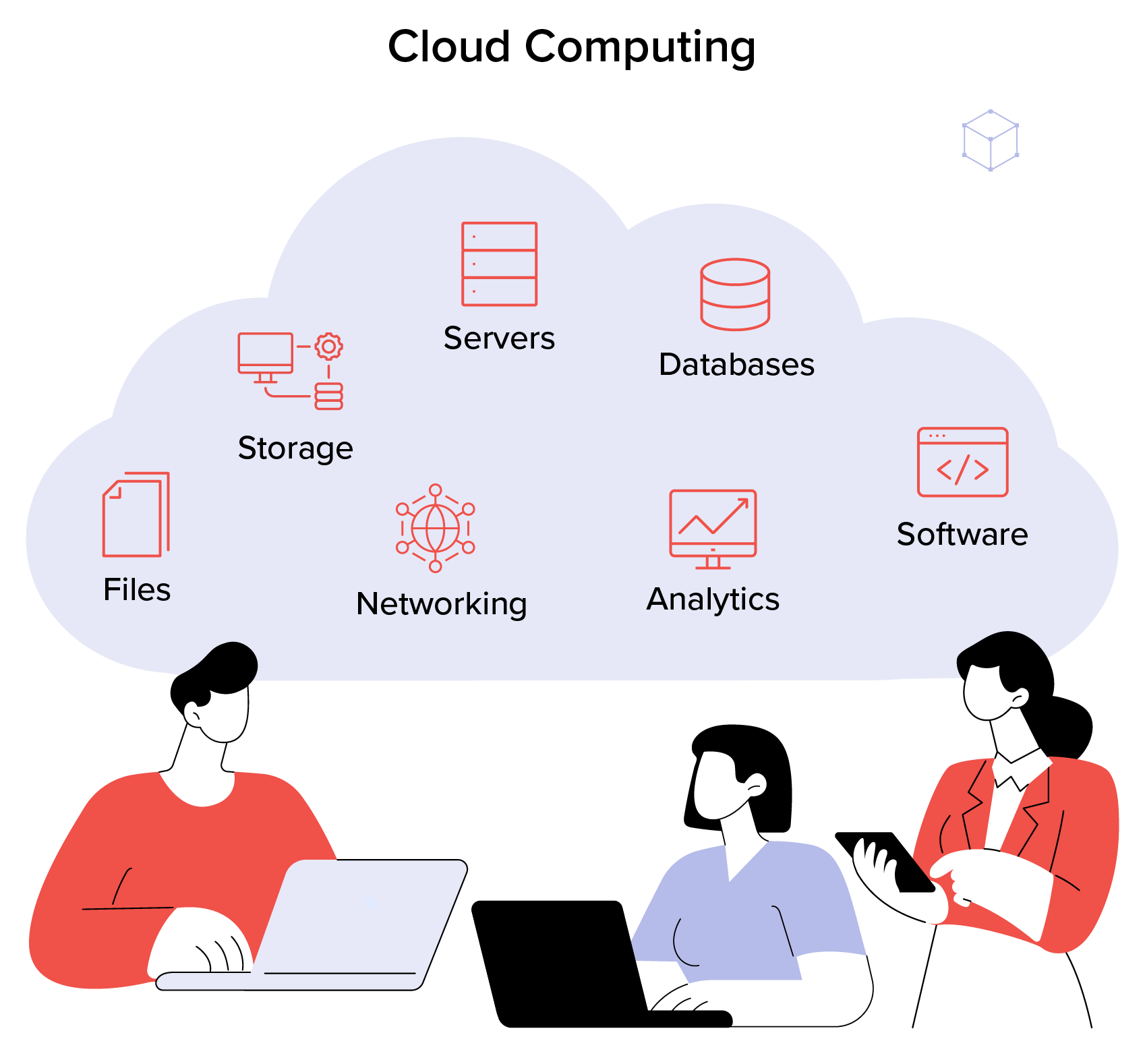
Cloud computing is the delivery of computing services—including servers, storage, databases, networking, software, and analytics—over the Internet (“the cloud”). It enables organizations and individuals to access and manage data and applications without needing on-premises infrastructure.

cloud computing diagram

Why Is Cloud Computing Important?

Cloud computing offers scalable, cost-effective, and flexible data solutions. With cloud computing, organizations can access computing resources on demand, enhance collaboration, and reduce IT maintenance costs. It enables remote work, disaster recovery, and efficient data management.

Key Characteristics of Cloud Computing

Cloud computing is a broad category of technology solutions, but many will have some, if not all, of the following characteristics:

  1. On-Demand Self-Service: Users can access resources as needed without human intervention.
  2. Broad Network Access: Services are available over the Internet from any location.
  3. Scalability: Computing resources can scale up or down based on demand.
  4. Resource Pooling: Multiple users can efficiently share computing resources.
  5. Measured Service: Users are billed based on usage, optimizing cost efficiency.
  6. Security: Data is protected by robust security measures.

Types of Cloud Computing

Individual cloud computing systems fall under these broad categories:

  1. Public Cloud: Computing services offered by third-party providers over the Internet (e.g., Amazon Web Services (AWS), Google Cloud, Microsoft Azure)
  2. Private Cloud: Dedicated cloud infrastructure used exclusively by one organization
  3. Hybrid Cloud: A combination of public and private clouds, for greater flexibility and security
  4. Multi-Cloud: The use of multiple cloud providers to avoid vendor lock-in, leverage different cloud systems for different capabilities, and improve redundancy

Cloud Computing Service Models

Cloud computing systems meet a variety of needs for a variety of different users, from technical users to consumer users. Depending on their focus, cloud systems are categorized in a number of different “as a service” groups:

  1. Infrastructure as a Service (IaaS): Provides virtualized computing resources such as servers, storage, and networking (e.g., Amazon EC2, Google Compute Engine)
  2. Platform as a Service (PaaS): Offers a platform for developing, testing, and deploying applications (e.g., Google App Engine, Microsoft Azure App Services)
  3. Software as a Service (SaaS): Delivers software applications over the Internet (e.g., Google Workspace, Salesforce, Dropbox).

Applications of Cloud Computing

Cloud computing is as diverse as computing itself. As such, cloud computing applications are many and various. They include:

  1. Business and Collaboration: Cloud-based productivity tools like Microsoft 365 and Slack
  2. Data Storage and Backup: Scalable storage solutions such as Google Drive and AWS S3
  3. Artificial Intelligence and Machine Learning: Cloud-based AI services for data processing and predictive analytics
  4. IoT (Internet of Things): Cloud platforms managing IoT devices and real-time data
  5. Web Hosting: Hosting websites and applications on cloud-based servers

Benefits of Cloud Computing

Cloud computing saw widespread adoption, due to its many benefits:

  1. Cost Efficiency: Reduces capital expenses on IT infrastructure
  2. Flexibility and Scalability: Easily scales resources up or down based on demand
  3. Remote Accessibility: Enables access from anywhere with an Internet connection
  4. Automatic Updates and Maintenance: Cloud providers manage security updates and patches
  5. Disaster Recovery: Maintains business continuity, with automated backups and redundancy

Challenges of Cloud Computing

However, cloud computing does present a number of challenges, including:

  1. Security and Privacy Risks: Storing sensitive data in the cloud requires strong security measures.
  2. Downtime and Connectivity Issues: Cloud services rely on stable Internet connections.
  3. Compliance and Regulatory Concerns: Organizations must adhere to industry regulations and data protection and privacy laws.
  4. Vendor Lock-in: Switching between cloud providers can be complex and costly, especially due to egress charges.

How the Denodo Platform Supports Cloud Computing

The Denodo Platform simplifies data access, accelerates data delivery, and enables trusted, AI-powered insights across both on-premises systems and the cloud, and it provides specialized support for the cloud:

The Denodo Platform can be flexibly deployed both on-premises and in the cloud.


Denodo and Cloud Computing: Case Studies

Denodo has partnered with the major cloud providers and has implemented the Denodo Platform in a variety of different hybrid and cloud ecosystems. Here are two examples:

A British wealth management company Leverages the Denodo Platform to Improve Customer Satisfaction and Business Agility on AWS

ABN AMRO Verzekeringen Advances its Data Strategy with the Denodo Platform and Microsoft Azure

Future Trends in Cloud Computing

Though cloud computing has been evolving for a number of years, it is still incorporating new discoveries and innovations. In the future of cloud computing, keep an eye out for the following developments:

  1. Edge Computing: Processing data closer to the source, to reduce latency
  2. Serverless Computing: Running applications without having to manage infrastructure
  3. Quantum Computing: Advancing computing power for complex problem-solving
  4. AI and Automation: Enhancing cloud security, efficiency, and analytics
  5. Green Cloud Computing: Sustainable cloud solutions for reducing energy consumption

Free Trial

Experience the full benefits of Denodo Enterprise Plus with Agora, our fully managed cloud service.

START FREE TRIAL

Denodo Express

The free way to data virtualization

DOWNLOAD FOR FREE